




















The 3C1D Investigative Communication Model: A Framework for Public Trust in the Digital Society
Introduction
In the digital society, information flows rapidly across platforms and profoundly influences public perception, belief, and decision-making. Investigative journalism, whistleblowing, and political communication increasingly face challenges related to credibility, responsibility, and social consequences. This article aims to disseminate academic knowledge in an accessible form by presenting the 3C1D Investigative Communication Model, a framework designed to explain and guide responsible communication that fosters public trust in the digital age.
Conceptual Background of the 3C1D Model
The 3C1D model is an interdisciplinary framework integrating insights from communication studies, social sciences, and legal studies. It is based on the premise that investigative communication must go beyond information transmission and incorporate ethical judgment and social responsibility. The model consists of four core components: Context, Credibility, Consequence, and Disclosure. The absence of any one component may lead to misunderstanding, social conflict, or erosion of public trust.
Core Components of the 3C1D Model
Context refers to the consideration of social, cultural, legal, and political environments in which information is communicated. Understanding context helps prevent misinterpretation and manipulation of information.
Credibility emphasizes the reliability of sources, verification processes, and the integrity of communicators. Credibility is fundamental to sustaining public confidence in investigative communication.
Consequence involves anticipating and evaluating the potential impacts of information disclosure on individuals, institutions, and society. Responsible communication requires awareness of possible harms and benefits.
Disclosure denotes transparent, ethical, and legally mindful information release. Disclosure is not merely revealing information but doing so with accountability and public interest as guiding principles.
Table 1. Components of the 3C1D Model
| Component | Definition | Social Contribution |
|---|---|---|
| Context | Social, legal, and situational environment | Reduces misinterpretation |
| Credibility | Trustworthiness of sources and verification | Builds public confidence |
| Consequence | Awareness of potential impacts | Minimizes social harm |
| Disclosure | Responsible and transparent information release | Enhances transparency and good governance |
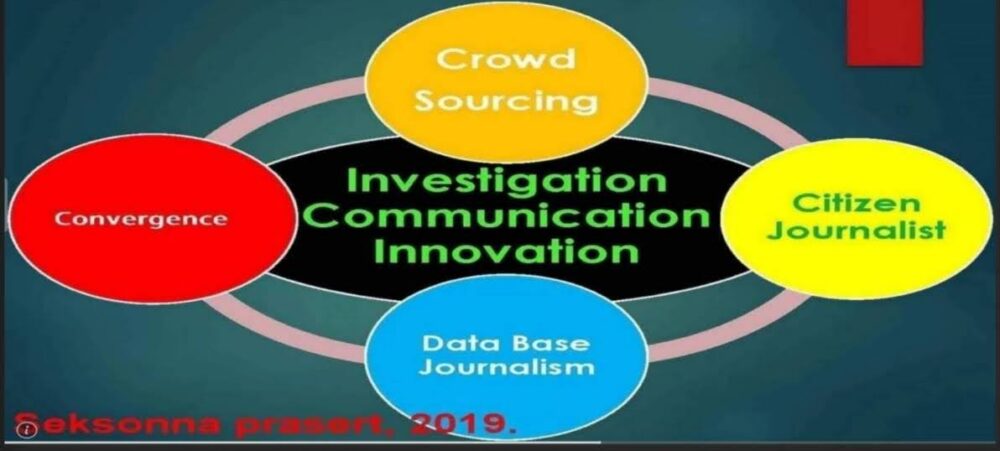
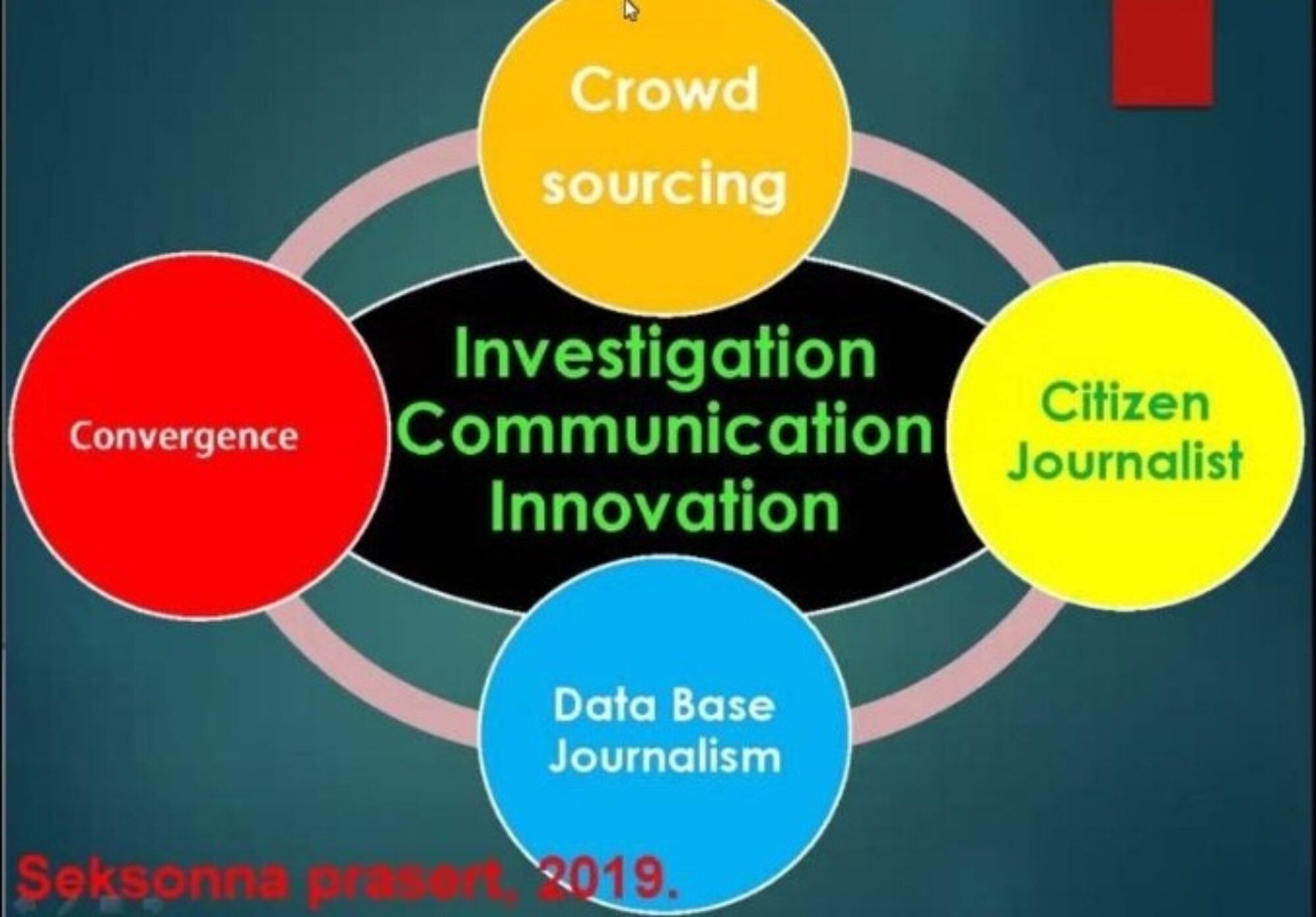
Figure 1. The 3C1D Investigative Communication Model
Context → Credibility → Consequence → Disclosure → Public Trust
Figure description: The model illustrates a cyclical process of investigative communication in which contextual awareness, credibility assessment, and impact evaluation guide responsible disclosure, ultimately reinforcing public trust in the digital society.
Applications in the Thai and Global Contexts
The 3C1D model can be applied by journalists, policymakers, public officials, and civil society organizations, particularly in sensitive areas such as corruption investigations, political accountability, and public policy communication. By employing this model, communicators can mitigate conflicts arising from contested interpretations and enhance the legitimacy of information disclosure. Although grounded in the Thai context, the model is adaptable to global digital societies facing similar challenges of misinformation and declining trust.
Conclusion
The 3C1D Investigative Communication Model provides a conceptual tool for understanding and practicing responsible communication in the digital era. By integrating ethical, social, and legal considerations, the model contributes to public trust, transparency, and democratic governance. This article is offered as an academic public good, encouraging further discussion, adaptation, and empirical testing across different social and cultural contexts.
References (APA Style)
Boonmee, T. (2019). Society and the power of communication. Bangkok: Chulalongkorn University Press.
Chantavanich, S. (2018). Qualitative research methods in social sciences. Bangkok: Chulalongkorn University Press.
Kasetsiri, C. (2020). Knowledge, power, and the politics of communication. Journal of Social Sciences, 32(2), 1–20.